Monday, May 6, 2013

Artist Statement (Poem) for Final Project


Stalemate: A position counting as a draw, in which a player is not in check but cannot move except into check.
This semester has been slower than usual.
I’m walking, but somehow I’m not moving.
I’m thinking, but I’m not doing.
I’m stuck.
STOP
EMERGENCY
EXIT
These reoccurring signs, the color of infrared
 neon lights
 bleed through my eyes
Those blue accessibility buttons have turned into lifesavers
while steep ramps and stairs have become nothing more than an inconvenient journey.
It’s frustrating when everything around you, even time is moving faster than you are.
I’m not asking for pity, I’m just asking for a way out.
My landscapes have become wider, but there’s no room for me to run or jump.
I see the light
so I remain hopeful
But unfortunately, my options are cut short.
In the game of chess, you would call it a stalemate.

Tuesday, April 23, 2013

Cathedral Art and Architecture


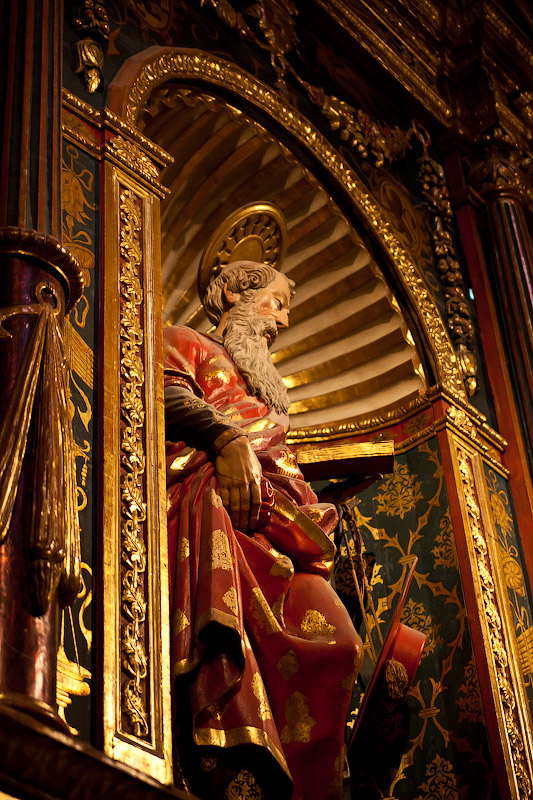
Something about cathedral art and architecture fascinates me. Maybe it's the geometric shapes and structures that capture my eye, or the intricate designs that go into every corner of the sanctuary. Whatever it is, it's definitely aesthetically beautiful and hard for one to miss.

Monday, April 15, 2013

"Se Fue La Luz":Inspiration For My Major


"Se fue la luz" is a common phrase used in the Dominican Republic. It means the lights went out. My goal in life is to harness reliable and sustainable energy sources to third world countries like the Dominican Republic. Which is why I am majoring in Electrical and Computer Engineering at the UofR.

Caves


A veil of darkness cloaks the natural beauty of caves. Some are found in cliffs at the edge of the coastline, chipped away by the relentless pounding of waves. Others form where a lava tube's outer surface cools and hardens and the inside of the molten rock drains away. Caves even form in glaciers where meltwater carves tunnels at the beginning of its journey to the sea.
But most caves form in karst, a type of landscape made of limestone, dolomite, and gypsum rocks that slowly dissolve in the presence of water with a slightly acidic tinge. Rain mixes with carbon dioxide in the atmosphere as it falls to the ground and then picks up more of the gas as it seeps into the soil. The combination is a weak acidic solution that dissolves calcite, the main mineral of karst rocks.
The acidic water percolates down into the Earth through cracks and fractures and creates a network of passages like an underground plumbing system. The passages widen as more water seeps down, allowing even more water to flow through them. Eventually, some of the passages become large enough to earn the distinction of cave. Most of these solutional caves require more than 100,000 years to widen large enough to hold a human.
The water courses down through the Earth until it reaches the zone where the rocks are completely saturated with water. Here, masses of water continually slosh to and fro, explaining why many caverns lay nearly horizontal.
Hidden in the darkness of caves, rock formations called speleothems droop from the ceilings like icicles, emerge from the floor like mushrooms, and cover the sides like sheets of a waterfall. Speleothems form as the carbon dioxide in the acidic water escapes in the airiness of the cave and the dissolved calcite hardens once again.
The icicle-shaped formations are called stalactites and form as water drips from the cave roof. Stalagmites grow up from the floor, usually from the water that drips off the end of stalactites. Columns form where stalactites and stalagmites join. Sheets of calcite growths on cave walls and floor are called flowstones. Other stalactites take the form of draperies and soda straws. Twisty shapes called helictites warp in all directions from the ceiling, walls, and floor.

SYZterhood At Its Finest!


Wednesday, March 27, 2013

The Northern Lights

The Northern lights is merely just God showing off lol. They are sooooo pretty!!! I definitely want to go see them.The Northern lights or the Aurora Borealis, are bright dazzling displays in the sky that occur when gaseous particles collide. They can be seen from many places on Earth but are visible nearly every night nearer to the North Pole. The South Pole has its own lights called Aurora Australis.
Auroras occur when charged particles from the sun's solar wind interact with Earth's magnetic field (at altitudes above 50 miles, or 80 km). During intense solar storms, the Northern Lights become more spectacular and can sometimes be visible as far south as Texas.
The colors in an aurora are caused when oxygen and nitrogen particles mix with the charged particles in the atmosphere. The colors depend on what gas is involved and how high in the ionosphere the reaction takes place.
  • Oxygen usually causes a green or brownish-red display.
  • Nitrogen causes a blue or red color.
  • Helium produces blue or purple colors.
  • The height of the displays can occur up to 620 miles (1,000 km), although most are between 80-120 km.
Auroras have been a source of wonder for thousands of years. Images of auroras have even been seen in ancient cave paintings in France. The best chance to see the northern lights occur between the months of March through April and September through October, or anytime there is a solar storm.
The disturbances behind the aurora also have effects only realized in the modern world. Intense storm activity on the sun and the increase in charged particles interacting with Earth’s magnetic field can disrupt power grids, satellite communications and even radio communications.